
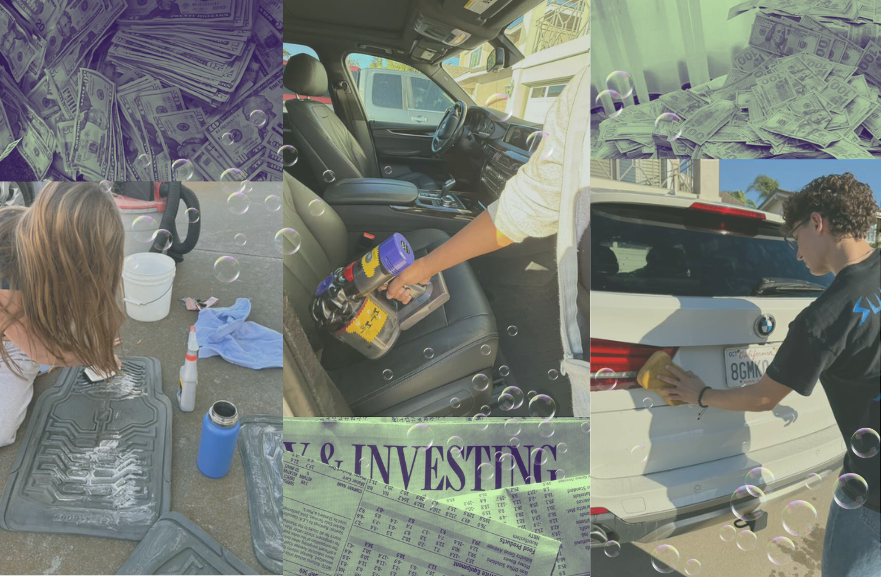
Last week, Nicholas Schwab, founder and teacher of the Business and Design (BaD) program at Huntington Beach High School (HBHS), launched a project for his senior class to come up with the most profitable business possible. The catch: each group was only given $5 with 2 days to launch. Remarkably, the class generated a sum of $835.91, with the winning group contributing $343 to the total amount.
The BaD program is unique in its format, in which the senior class is run like a real business. In the first quarter of the school year, the class must decide on a business that will generate revenue for the program. The class put together a series of pitches, but these ideas hadn’t been tested yet, so they weren’t ready to be fully developed. In order to teach his students that testing is crucial to the success of a business, Schwab launched the rapid business challenge.
The group that won realized they had to provide a service rather than a product since there was such a heavy restriction on the money they could initially invest in the business. They decided to wash cars for just $10-20 per customer, but the real challenge was marketing.
In order to get the word out, Kiara Sims, a senior BaD student said, “We texted all our friends and posted a flier on our socials.”
The time restraint was the biggest limitation for the class. This forced groups to make quick decisions and make mistakes as they were working.
Stephanie Dahabreh, a BaD senior and member of the winning team, said, “Our biggest setback was time. Trying to wash people’s cars before and after school and practice was tiring and we had to plan our days way ahead of time to make sure we got to all the customers.”
Texts and social media only got the team so far, and the students in this group learned that being active participants in their business was the best method of promotion. Schwab always encourages his students to take action in their projects and businesses, which means active participation and putting in an effort to advance the market.
“We got a lot more money when we talked to people on the street as we worked,” said Sims.
Maggie O’Byrnes, another BaD senior in the group, said, “We got more money from neighbors’ doors we knocked on.”
With the students placed under strict time restraint, they were forced to learn as they worked.
O’Byrnes said, “I didn’t know how to wash cars, and I learned how to do it [as I worked].”
Another great advantage of this project was the free advertising and exposure it provided for the BaD program as the groups were out managing their businesses.
“When I was talking to the people, they asked what I was washing cars for and I told them about our program, [which encouraged them] to support,” said O’Byrnes.
The unique projects Schwab has his students work on creates strong intellectuals and prepares them for real-life business scenarios they may encounter in the future. Instead of following the same format that typical classrooms use to create the perfect student, BaD works to foster creativity for its entrepreneurs so they can learn how they can profit off of their ideas.


