Over the past few years, social media influencers have set the bar for a “perfect” Christmas, with gift guides, hauls and vlogs. They’ve dominated the “for-you page” during the holiday season, going viral on platforms like TikTok, Instagram and YouTube. However, these posts often include heavily scripted and edited content that is meticulously curated towards a specific audience, typically to promote a brand. These posts can pressure viewers into keeping up with the latest product, setting unrealistic standards for susceptible viewers, such as the teenage consumer. However, behind the perfectly wrapped gifts and retouched photos, the reality of an “influencer Christmas” is very different.
Many of their videos initially gain popularity by using trending sounds, relevant hashtags (like #fyp and #trending) and high-quality visuals. Influencers will also post these videos on multiple platforms to reach the largest possible audience.
Kira DeGree, a freshman at Huntington Beach High School (HBHS), said, “I mostly see these videos on Instagram Reels and TikTok. I also have like lots of friends that watch these videos, so we get a lot of our gifting inspiration from them. These are the videos I see most during Christmastime.”
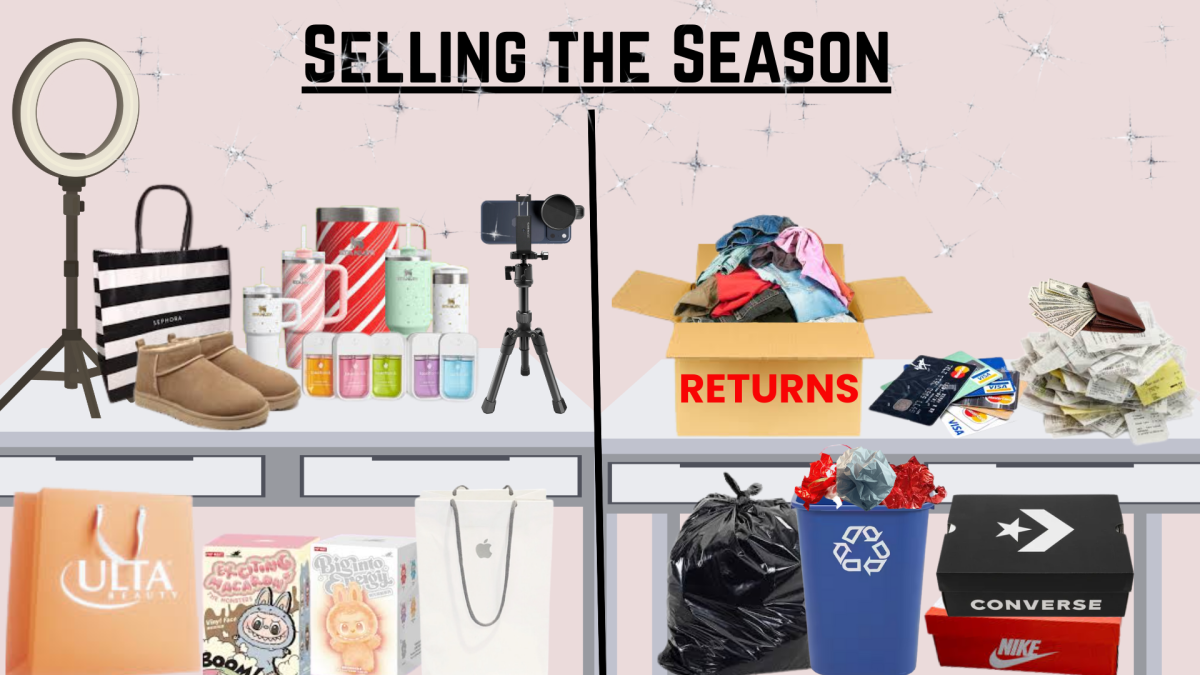
The rise of influencers on social media can lead young viewers to form unrealistic expectations for their gift giving or receiving experience. Many of the “ChristmasTok” videos are sponsored by major brands for promotional material. Additionally, many of the items in influencers’ “burr baskets,” personalized gift baskets typically including pricey self care items, can add up to substantial sums of money. This is due to so many of the items being trendy, such as Stanley tumblers and different varieties of Summer Fridays lip butter balm, which cost $24 a piece at most U.S. Sephora locations. Industry research indicates that many young people are inclined to purchase certain items solely based on online recommendations.
Aleksija Marshall, a freshman at HBHS, said, “A lot of the items I’ve gotten for Christmas these past years have come from those burr basket videos on my feed. I use them as inspiration so I can get ideas for my wishlist every year. Plus, I just enjoy watching them!”
In recent years, there has been a surge in “de-influencing” videos on social media. They’re created to help viewers see the reality behind the “ChristmasTok” videos and to discourage unnecessary purchases. Popular “de-influencers,” like Rachel Louise, emphasize the idea of need versus want in their videos, explaining why products may not be worth the cost despite their traction on social media.
However, there can be some advantages to the overconsumption-core that rifts through social media during the holiday season.
Sophomore HBHS student, Emmalyn Wood, said, “I like watching influencer Christmas hauls because it gives me motivation to work hard in school and eventually become rich. That way, I can spoil myself in the future during Christmas as the influencers do with my hard-earned money.”
Over time, online influencers have set unrealistic standards for viewers worldwide on what constitutes a perfect Christmas. Their impact on expectations and spending for the holiday season has sparked opinions on both viewpoints, with sales of trending gifts growing more and more with each click and each like.



![[REDACTED] Files, [REDACTED] Questions](https://hbslick.com/wp-content/uploads/2026/04/Screenshot-2026-04-28-8.46.57-AM.png)