
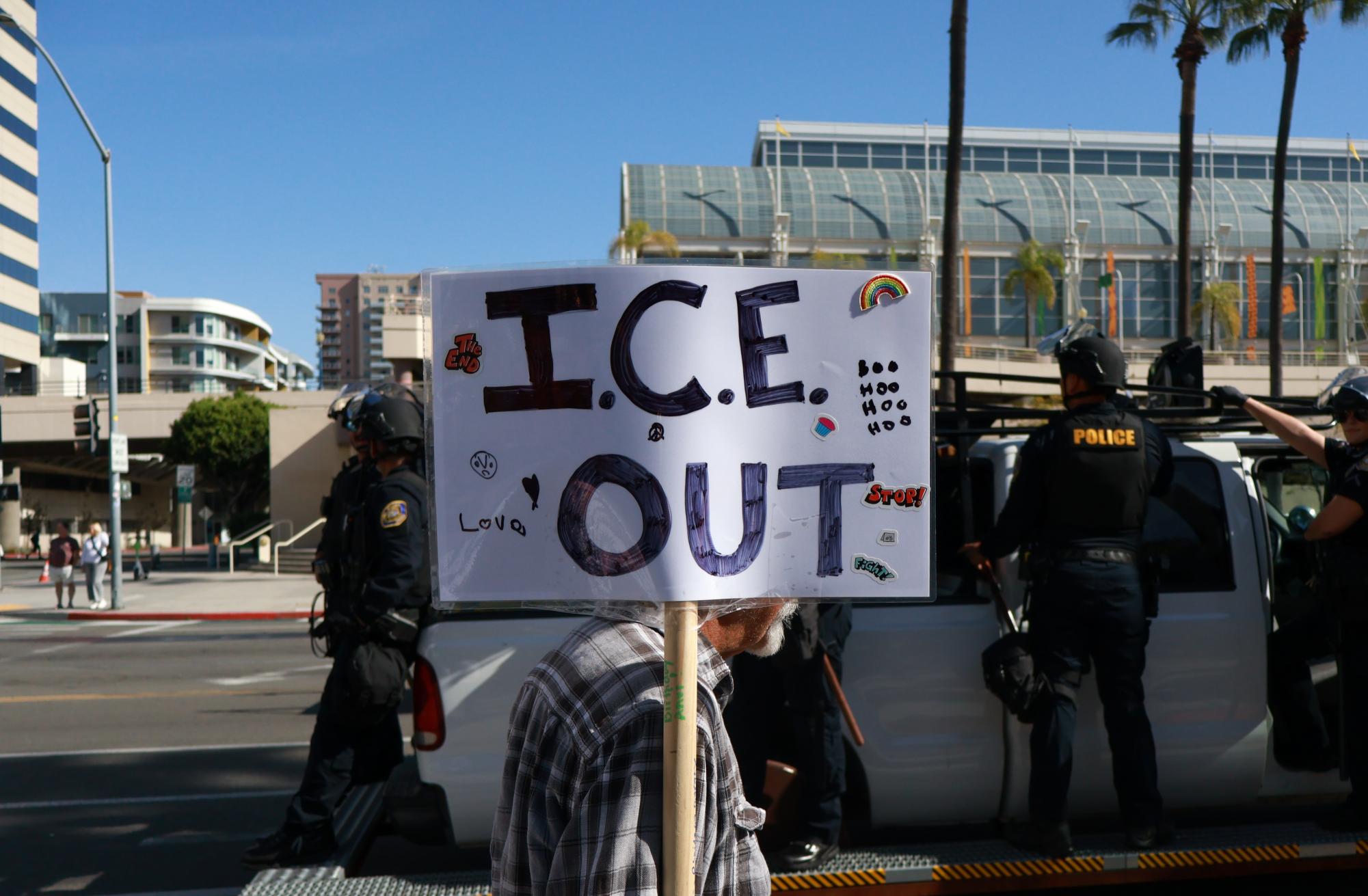

Jan. 30 was a monumental day in American history, as hundreds of thousands of people took to the streets to protest the U.S. Immigration and Customs Enforcement’s (ICE) operations taking place in their communities.
What’s Happening Right Now
Recent actions and statements from ICE, the Trump Administration and the Department of Homeland Security (D.H.S.) have fueled public outrage, moving many people to protest. Kristi Noem, the Secretary of Homeland Security, presented conflicting stories in her statements following the deaths of law abiding citizens, accusing them of committing acts of domestic terrorism to defend the brutality. The death of Renee Good, a mother who was shot three times in the head while driving by an ICE operation, and Alex Pretti, who was shot ten times on the street while trying to protect a woman being attacked by ICE agents, are just two of the many tragedies that triggered the strike. Both of these people were American citizens who served as legal observers in Minneapolis. Many witnesses of Pretti’s death were immediately detained, and one witness claimed he and a dozen other people were held in federal custody after the shooting. Meanwhile, Trump and the D.H.S. create false narratives to excuse ICE’s brutal actions.
These events led to the largest general nationwide strike since the 1940s, which was fought to improve workers’ wages after World War II. Citizens use a general strike to send a political message to the government through a widespread coordinated cessation of working, going to school or contributing to the economy.
The strike began in Minnesota after the Trump Administration deployed over 3,000 ICE agents to the Minneapolis area alone, outnumbering the Minneapolis police force by nearly five times. Good and Pretti’s deaths occurred after the mass deployment in Minneapolis, leaving the city a hotspot for anti-ICE protests.
Cities across America recognized their efforts and joined in solidarity. 50 states participated, with 300+ actions and millions standing up. Major cities like Los Angeles, Portland and New York also hosted massive protests and students organized walkouts to show their support.
Charlotte Palmer, a young activist and senior at Huntington Beach High School (HBHS), said, “The Overton Window is shifting to where ICE is unacceptable. More and more people are starting to take a stand against it, and I just hope it keeps happening.” The Overton Window describes a spectrum on which a political policy or idea is accepted by the majority of the population.
Participating in a Protest
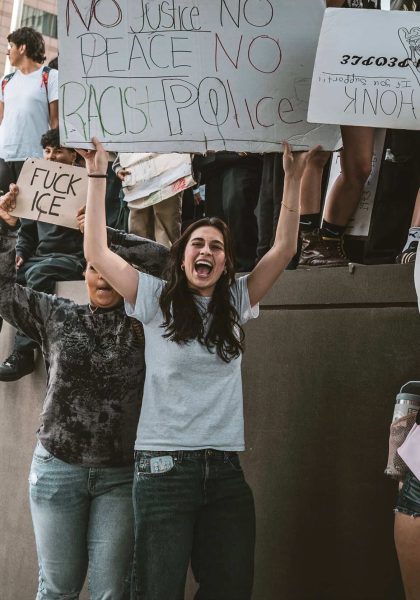
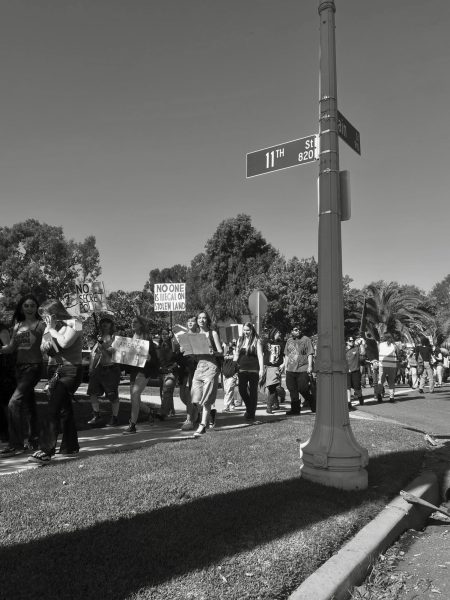
Many protests look similar, with people lining the street carrying signs and marching in unison.
Protests like these are happening in many cities across the country, usually organized outside of government buildings or monuments.
Joseph Bray, an HBHS junior and activist, said, “If about 3% of the country’s population comes out to protest, it significantly helps turn the tides of how things are moving, especially away from a dictatorial or authoritarian state.”
Large groups of protestors commonly use chants as a form of unification during marches. Isabella Rodriguez, a walkout participant from Milikan High School, led chants through downtown Long Beach shouting, “No justice, no peace, no racist police.”
“My role was to give those who can’t speak out a voice,” Rodriguez said.
Activists also bring signs to marches as a way to make a statement without speaking. They typically consist of short and shocking political statements that are meant to trigger a reaction.
Some signs read “left my lesson to teach you one,” “power to the people,” “veto the cheeto,” “no kings” and “fear ignorance, not immigrants.”
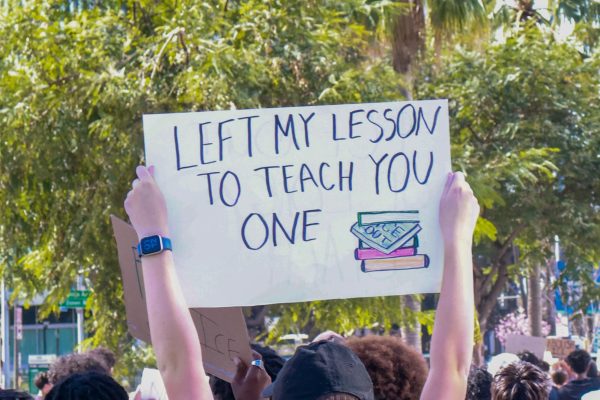
Young faces have shown that they’re the leaders of this revolution, and they won’t let their age prevent them from demanding change.
Palmer said, “A lot of the organized protests have been through social media, so I think that’s a big part of it. Also, ICE is taking people from our age group. They will raid schools, which is really a big part of it, too. It’s directly affecting us.”
“I personally have grandparents who are immigrants,” said Rodriguez. “Being Mexican myself, it’s devastating to see innocent families being ripped apart and separated.”
Schools across the nation organized walkouts as a way to protest. Bray sparked the HBHS walkout which truly showed how fast a movement can spread.
“I texted a few friends at first, asking if they would be willing to participate in this. I was thinking, ‘how do I get this organized?’” Bray said. “So I reached out to a school club leader, who said ‘Let’s do it,’ and they started spreading the word. I’m pretty sure that they actually organized a lot more of it.”
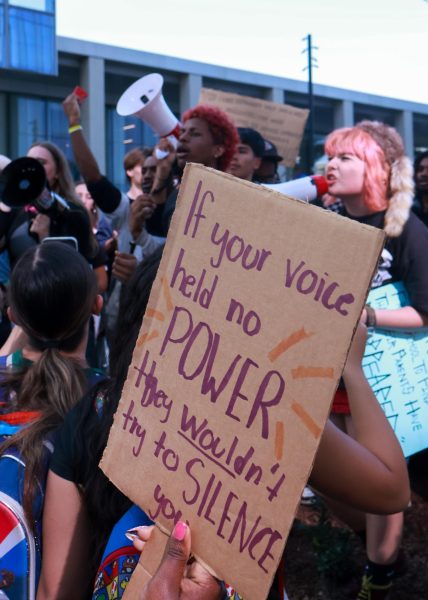
An estimated 150 to 200 students showed up to the HBHS walkout, and it was all started by just one person speaking out.
Palmer said, “People think, ‘they just want to skip school,’ but most people there really value their education. For me, I didn’t really want to go because I had stuff to do in my stats class, but it’s really important right now.”
Because of recent brutality from ICE, many people are scared to take to the streets. However, this doesn’t mean they’re completely silenced because there are other ways to fight for change.
Citizens can call or email their state senators and representatives demanding to stop funding ICE. Congress depends on the votes of the people, and many of them want the voters on their side for re-election, so the demands of citizens do make a difference.
To call, search 5calls.org, select “Defund ICE,” and follow the instructions provided.
Boycotting
Boycotting is an effective way to silently protest. Many wealthy tech companies are actively funding ICE, including Amazon, Microsoft, AT&T, FedEx and Dell, just to name a few. Boycotting these companies places more pressure on them to stop funding ICE as they lose revenue from their customers.
The two most popular home improvement companies in America, Lowes and Home Depot, have become targets for ICE arrests after U.S. Homeland Security Adviser Stephen Miller said the agency should target the home improvement chains, where migrant day laborers are known to gather.
One of the leading chatbots in artificial intelligence is ChatGPT, a company who has worked with border control providing resources and funds. ChatGPT’s president and CEO have also both made large contributions to the Trump Administration. Greg Brockman, the president, and his wife, reportedly gave $25 million to MAGA Inc., a pro‑Trump super Political Action Committee (PAC), and OpenAI CEO Sam Altman announced a $1 million personal donation to Trump’s inaugural fund.
Not only does the company fund ICE, they also provide AI resources to aid their hiring process. ICE relies on an AI-assisted resume screening tool powered by OpenAI’s GPT-4, reflecting the 120% increase of ICE agents in just 4 months. The DHS official website says, “[we received] more than 220,000 applications to join ICE from patriotic Americans,” with over 22,000 agents recruited using an AI background screen that commonly makes errors in resumé scanning processes.
ICE also uses Palantir, a software company that develops advanced AI for governmental and commercial use. ICE has a “close relationship” with the company which provides them with AI tools used to extract addresses and other information. They are actively aiding ICE officers in finding leads for “Enforcement and Removal Operations” by identifying individuals for potential deportation with these systems.
Activists argue there isn’t a “more ethical” form of artificial intelligence, and advocate for boycotting all AI softwares entirely.
What’s Next?
Congressional Democrats are pushing for a body cam requirement for ICE agents to reinforce accountability. This raises concerns for privacy advocates, who point out that this footage could easily be used to identify and track protestors.
If you missed Jan. 30, the next nationwide organized protest, “No Kings,” is scheduled for March 28. This will mark the third of the
“No Kings” protests where Americans speak out against Trump’s desire for extreme power over the United States. Protests will be organized in almost every city across America, fighting for the constitution and the lives of our neighbors.
Historically, protests spark change when the government starts leaning towards corruption. Activists will keep voicing their concerns and showing up to protest because America moves toward change when it’s a united nation. ICE is acting unconstitutionally, and the people will keep them in check.



![[REDACTED] Files, [REDACTED] Questions](https://hbslick.com/wp-content/uploads/2026/04/Screenshot-2026-04-28-8.46.57-AM.png)