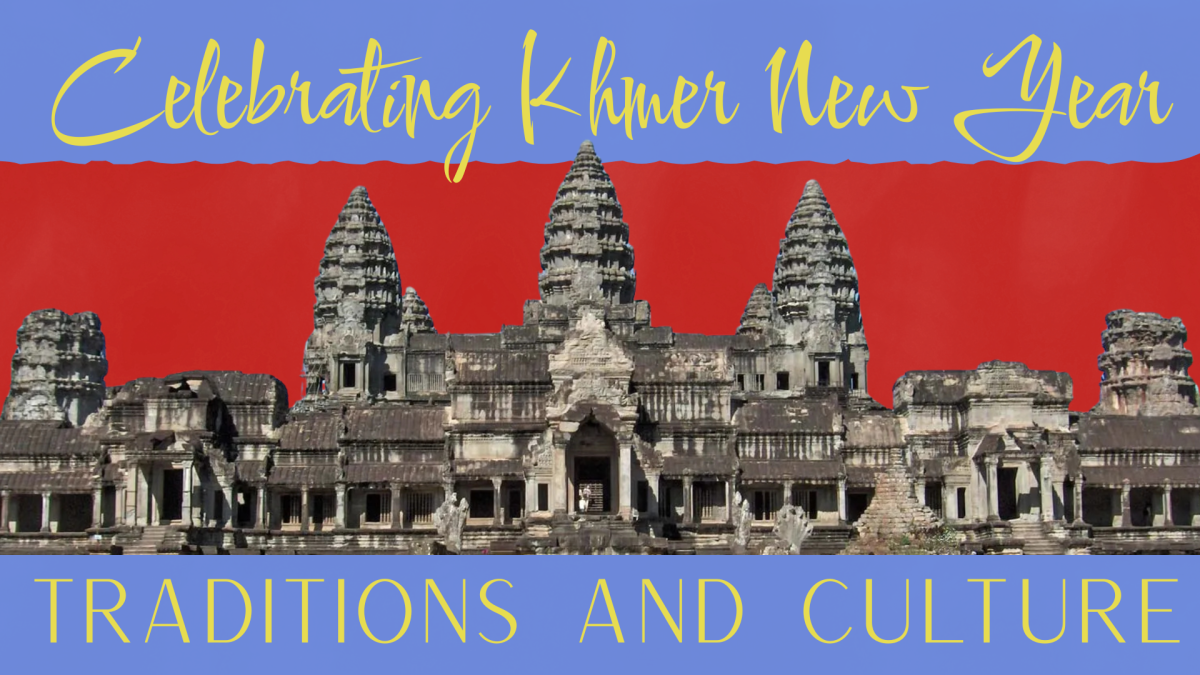
The all-familiar Lunar New Year officially welcomed the spring season on Feb. 17. This major festival, primarily celebrated by East Asian and some Southeast Asian countries, is internationally recognized and deeply rooted in tradition and culture. However, for other South and Southeast Asian countries like Cambodia, the new year begins mid-April.
What is Khmer New Year?
Solar New Year, or Choul Chnam Thmey in Khmer, is a three-day long celebration that commemorates the sun’s shift into the Aries zodiac. The first day of the festival begins on April 13, the Maha Sangkran. This day officially marks the transition into the new year and is the time of active celebration. On Maha Sangkran, families will pray at the temple in their best traditional attire and bring offerings for the new year.
After praying, communities gather to host lively festivals that include dancing, water festivities and music. The second day of the festival is known as Veareak Vanabat, focusing on good deeds and purity. During this time, Cambodians will focus on donation and volunteering such as donating goods to local community centers or lending assistance in community events. The third day, Veareak Laeung Sak, marks the end of festivities but the welcome of a new beginning. Cambodians wash the hands and feet of their parents to symbolize cleansing and respect, and some families will release domesticated animals (usually a turtle) to represent a free spirit.

What are the festival traditions?
For Cambodian-Americans, Khmer New Year is heavily anticipated year-long, and part of the reason being the shaving cream and water gun wars. Children and teenagers gather to engage in a battle of spraying shaving cream and splashing water.
“I tried to participate in the shaving cream and water gun wars,” said Jade Hem, a Vietnamese-Cambodian American and sophomore at Huntington Beach High School (HBHS). “It was really fun, but very messy, but the tradition is really beautiful to me and has an amazing meaning behind why we do it,” said Hem. “Flush out the old, bring in the new!”
Festivals are a pivotal part of the new year celebrations. After temple formalities, families will set up mats (in Khmer called kantael) and have a picnic with each other surrounding the festivities. Many celebrate with their own traditions as well, most notably receiving money from elders.
“It focuses on not just the new year, but family, culture and spirit,” Hem said.
Tatiana Nguyen is a Vietnamese-American in her sophomore year at HBHS and a celebrator of the Lunar New Year. However, she expresses her enthusiasm and willingness to celebrate the Solar New Year as well. She said, “I already celebrate Lunar New Year, so of course I’d be willing to celebrate [Khmer New Year] as well.”
While Lunar New Year is traditionally separated from Solar New Year, the embrace of different Asian cultures represents the unification in Southeast Asian tradition. “I love seeing all the different traditional and cultural festivities because they really bring out the differences we all have,” Nguyen said.
Similarly, Hao Le, a senior at HBHS and Vietnamese-American expresses his inclination toward Cambodian culture. “I would like to celebrate it because I think this difference between Asian culture and trying something new sounds really cool,” said Le.
Le also draws connections between the two different new years. “I think [Lunar and Solar New Year] represent unification among cultures,” Le said, “like how in Vietnamese Lunar New Year we also wish each other good health and good fortune.”
Where can you celebrate?
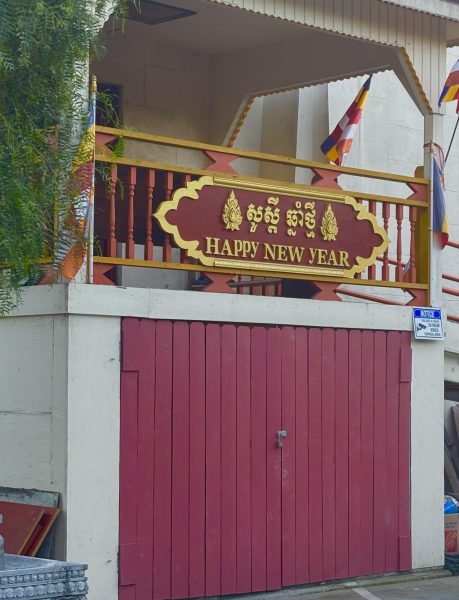
Khmer New Year is celebrated worldwide and there are many widespread opportunities to celebrate in America as well. For Huntington Beach, festivals are more prominent in neighboring cities such as Long Beach. Most notably in Long Beach, there will be a free Cambodia Town Parade and Festival on April 4, 2026 from 10 AM to 9 PM with the parade starting near the intersection of Anaheim Street and Orange Avenue. Following the parade is a festival hosted by Long Beach City College (LBCC) which is widely popular among local Cambodian residents. As March comes to an end and the month of April commences, join in on the festivities and celebrate Khmer New Year.


