
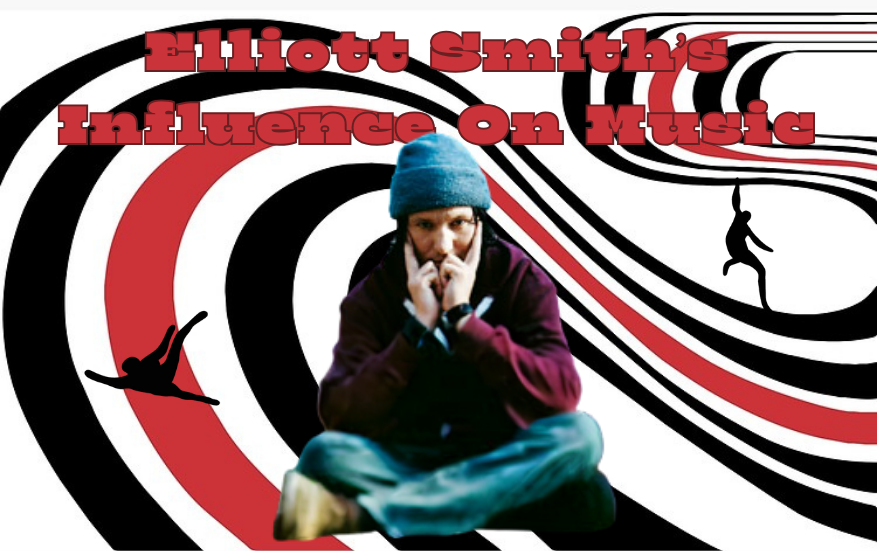
American singer-songwriter Elliott Smith, known for his soft, intimate vocal style, played a large role in shaping modern music. He’s best known for his Oscar-nominated song, “Miss Misery,” which was featured on the soundtrack of the Oscar-winning movie “Good Will Hunting” (1997). At the peak of his fame, he tragically died, but his music remains relevant to his fans, and his legacy prevails to this day.
Smith’s Life
Smith grew up in Texas and was raised on classic rock bands like The Beatles. Specifically, The Beatles’ “White Album,” which is recognized as a heavy influence on his musical style. He learned how to play the piano first and later decided that he wanted to play the guitar instead. He went to high school in Portland, Oregon, and played in a few bands during his time there. After high school, he went to Hampshire College in Massachusetts with a degree in political philosophy. In the 90s, Smith co-founded the band Heatmiser with Neil Gust. He only stayed in the band for about five years, and in 1996, the band split up due to creative differences. Smith’s solo career was on the rise thanks to the release of his album “Roman Candle” and his self-titled album, “Elliott Smith.”
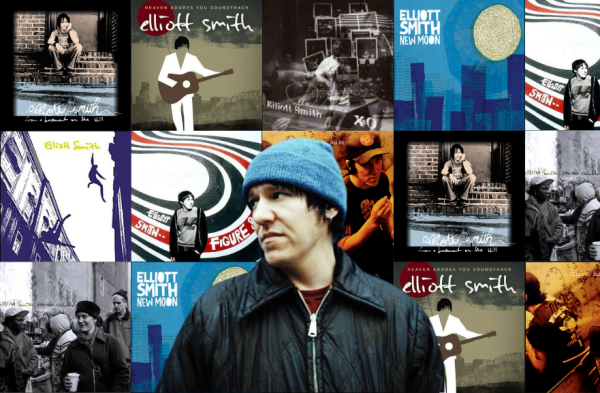
In 1997, Smith’s album “Either/Or” became very popular after it was featured in “Good Will Hunting,” and his song “Miss Misery” was nominated for best original song at the 1998 Oscars. That same year, he released his album “XO,” and later, released “Figure 8.”
Ashtyn Johnson, a freshman at Huntington Beach High School (HBHS), said, “Right now, I would say ‘XO’ is my favorite album, but my overall favorite has to be ‘Either/Or’ because it’s what really got me into his music.”
Smith was vocal about how he struggled with substance abuse and depression throughout his life, frequently bringing it up in his music. His honesty about his mental hardships made him stand out as an artist and drew people to his music because of its relatability.
On Oct. 21, 2003, at age 34, Smith was found with two stab wounds in his chest. Initially, it was reported as a suicide by the police, but later it was classified as an open verdict, due to the coroner being unable to determine if the wounds were self-inflicted or inflicted by another person. Still, his cause of death is debated.
His music didn’t stop completely after his death, with many compilations of unreleased material released over the years. “From a Basement on the Hill,” which was released about a year after his death, “New Moon,” which also came out in 2004 and the release of “An Introduction to… Elliott Smith” in 2010 are all albums that came out after his death.
Trading his CDs became popular among his fans in the late 1990s. Finding bootlegs of different songs that Smith performed live and trading them was something that many fans did.
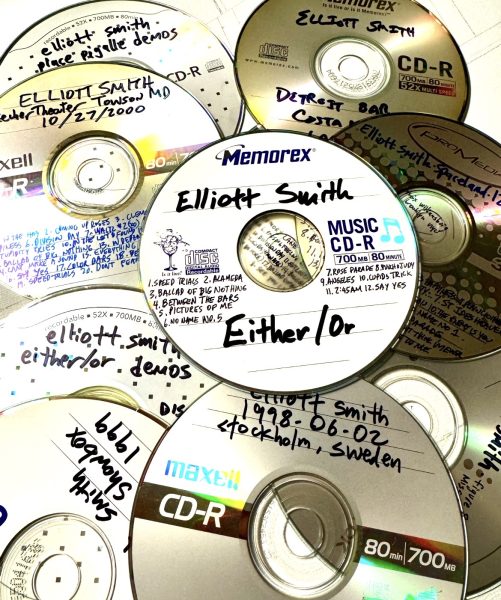
Rob Morikone, Westminster High School alumni and current musician, said, “He absolutely inspired me to find out more about him and dig into his recorded output, both in what was commercially available as well as bootlegs. I collected quite a few recordings of his live shows, demos and fan compilations from that period.”
Smith’s Music
To achieve his unique sound, he would use a four-track cassette recorder to layer his own vocals and create complex harmonies. He would also choose to record in places like his basement to add a natural reverb effect to his music. Smith’s songs typically featured acoustic guitar, and Smith would often play complex, jazz-like finger-style patterns. All of these factors, along with his melancholic lyrics, make up Smith’s influential sound.
“When I heard him, I really liked his lyrics and the storytelling…It’s what sets his music aside from other people; his lyrics are just very different,” said Johnson.
Elliot’s discography is typically centered around darker topics like depression and other mental health struggles. He took inspiration from his own life, letting his music reflect how he felt. The songs “A Fond Farewell” and “Twilight” are exemplary of this, with lyrics like “A little less than a happy high, a little less than a suicide, the only things that you really tried, this is not my life.”
Songs like “King’s Crossing” also reflect on Smith’s history of substance abuse and addiction. Toward the end of his career, his addiction became more extreme as depicted by the lyrics, “I know how I’ll begin, and how I’ll end, strung out again,” in the track, “Strung Out Again.”
As he became popular, his music also reflected how he felt about this new fame. The song “Pictures of Me” shows how Smith didn’t enjoy all of the attention on him: “So sick and tired of all these pictures of me, Completely wrong, Totally wrong.”
At this time, he did many interviews where he stated that his goal was not to be famous, but to write music. In one specific interview smith said, “I’m the wrong kind of person to be really big and famous.”

(Margaret Patten)
Smith’s Impact
Smith was incredibly innovative with the technology he used, and some of the techniques he developed are still used to this day. Although Smith was not the first person to use this style, he definitely made it popular. There have been countless artists who have credited him or paid homage to him in some way.
One of the most popular examples of this is indie singer-songwriter Phoebe Bridgers. She said to Far Out Magazine, “Elliott Smith said that his songs are like little pictures, and that was always really attractive to me. It really does kind of feel like little pictures or a little snapshot of an emotional time.”
Bridgers’ style is similar to Smith’s, often using a breathy vocal style and having a similar atmosphere overall.
Amelie Amador, a freshman at HBHS, said, “I listen to Elliott Smith and Phoebe Bridgers, and I do like them for similar reasons…and I love how the layered vocals and acoustic guitar sound together…I can really hear a resemblance in Phoebe Bridgers’ music to Elliott Smith’s.”
Another example of mainstream music artists taking inspiration from Smith is Frank Ocean. Ocean made reference to Smith’s song “A Fond Farewell To a Friend,” by using the same lyrics in his song “Siegfried:” “This is not my life, it’s just a fond farewell to a friend. It’s just a fond farewell to a friend. This is not my life.”
Alt-pop artist Billie Eilish actually covers many of Smith’s songs at her concerts. She briefly shared footage of her covering “Let’s Get It” on Sirius XM’s “The Howard Stern Show.” Her music also has a similar tone to Smith’s. American rapper Mac Miller is another artist who has kept Smith’s music alive at his concerts. Moreover, Miller famously did his own cover of Smith’s song “Speed Trials” and released it on his SoundCloud account.
Smith’s influence travels beyond that of mainstream music and pop culture, also impacting countless musicians getting their start with his style, tone, or technology.
“I don’t think that I [use Smith’s style] consciously, but I once played a couple of songs that I had written and recorded for my co-worker, and then sometime later, I was playing some Elliott Smith in the office, and he said, ‘Who is this? Oh, I see where you get your influence from, so maybe there is a little something there. Probably more so in tone than in technical proficiency, unfortunately,” said Morikone.
With the anniversary of the 70th Academy Awards, where Smith’s song, “Miss Misery,” was nominated for Best Original Song, it’s important to still listen to his music. Smith braves complex topics like depression and addiction in his music, which are certainly still relevant now. Each of his songs reveals deep emotion and beautiful storytelling that stays with fans long after their first listen. His impact on both well-known and local artists shows how important his music still is today.