
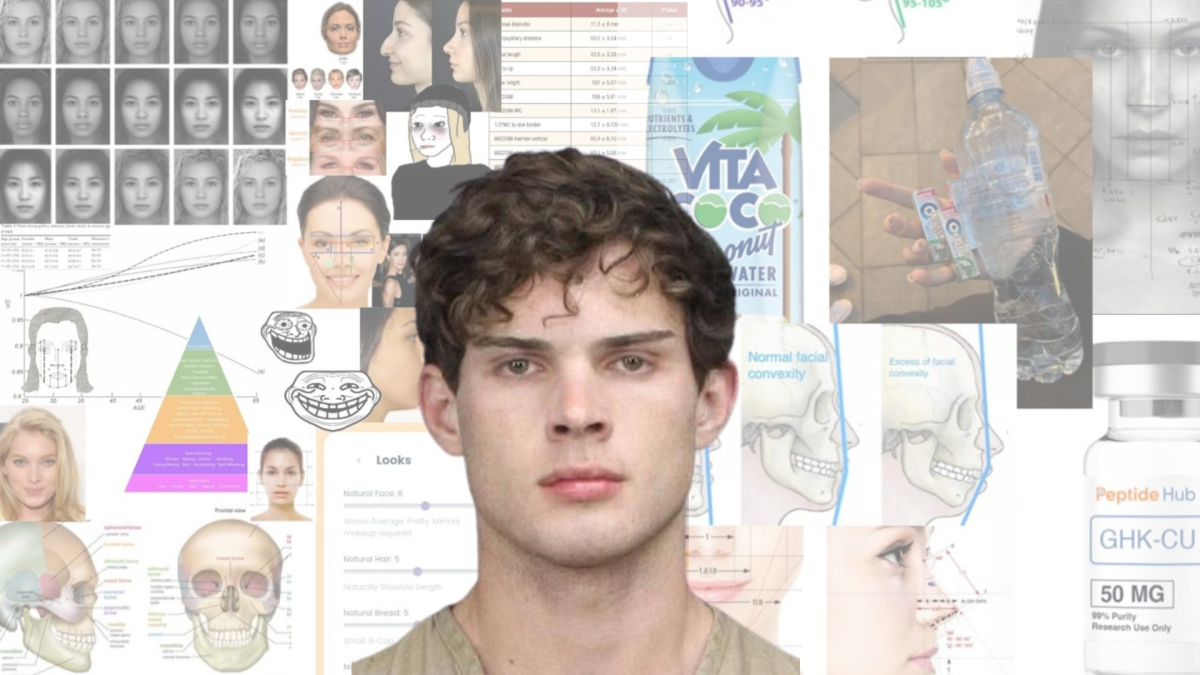
“LooksMaxxing” is a trend that promotes achieving the most attractive state one can possibly reach, with specific attention on jawlines, eyes and physique. Looksmaxxing is an old trend from 2015, originating from three main forums associated with the “black pill” ideology: PUAHate, Sluthate, and Lookism (the “PSL Forums”). The forums were online communities where users shared opinions, advice and discussions about physical appearance, dating and social status. These sites helped spread the idea of Looksmaxxing.
Within the community, people are ranked entirely by attractiveness using labels such as “Sub-3,” “Low-Tier Normie,” “Chad,” and ultimately, “True Adam” or “True Eve.” This ranking system reduces human worth to their appearance alone and increases insecurity in adolescents. “Looksmaxxers” aim to increase their scores via “Softmaxxing” (lower-risk appearance changes, such as skincare, dieting or grooming) and “Hardmaxxing” (steroid use, cosmetic surgery and hair transplants). Finally, “Bonesmashing,” which involves young men striking their own faces with hammers, is based on the 19th-century theory called Wolffs Law that cites repeated blunt trauma will cause the facial bones to heal back harder and make them look more masculine. It doesn’t work, and it can cause swelling, microfractures, nerve damage, disfigurement and even serious permanent injury.
Andy Mai, freshman at Huntington Beach High School (HBHS), said, “This isn’t anything new; people have been obsessing about their looks for all of human history. It’s just more toxic now and easier than ever to exploit people’s insecurities.”
Social Media & A Look Into Clavicular’s Content
Recently, Looksmaxxing has resurfaced on social media and has become extremely popular, especially on TikTok. Influencers like Braden Peters, also known as Clavicular, is a 20-year-old streamer helping push these ideas to a larger audience. He’s guided by the idea that physical appearance trumps all else and avidly exalts Looksmaxxing, but his content often strays off into sexist, misogynistic and racist philosophies.
Mai said, “The message that Clavicular is spreading on the young male population is very dangerous, and it provides a false reality in which only your looks matter. It’s causing young men to value their looks over their health, in turn making them risk their health to improve their looks.”
Looksmaxxing content makes it seem like your looks determine how people treat you, your success and even your worth. On one of these forums, a month before Peters’ 18th birthday, he made a post saying he had already gone on four steroid cycles with doses as high as 550 milligrams of testosterone weekly. For reference, the dosage middle-aged men take to get their testosterone levels healthy tops out at 200 milligrams. In the same post, Peters notes that taking substances in the past had seriously affected his liver health, but appeared unconcerned by the effects. By the age of 16, he was spending $700 per steroid cycle. Ironically, his drug use ranked pretty low in terms of bizarre methods he was using to supposedly improve his looks. According to Peters, one of the methods he used was called “Thumb Pulling,” which entailed pulling the roof of his mouth outwards to widen his jaw. He also chewed gum, which allegedly helped his jawline as well.
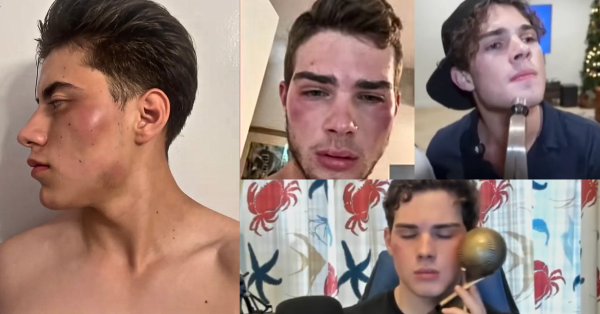
Clavicular demonstrates his own form of Bonesmashing in a YouTube video where he said, “I know it hurts, but that means it’s working. And that’s the only indication. You have to push past the pain.” While he acknowledges the effects of Bonesmashing are most likely not permanent, he still claims that it swells up his face and makes him look more defined.
In another post on the same forum, he gives a guide on how to avoid as many interactions as possible and said, “I’d rather look homeless than have to talk to someone for 30 minutes straight. God, I want to Ropemaxx.”
He even went as far as making an entire thread about his crippling social anxiety. He gives tutorials on how to say less than 50 words a day, or how he wakes up 30 minutes earlier than he has to just to avoid seeing his parents in the morning. He said, “I dread talking to people in real life, even if it’s for 30 seconds. I’d do anything to avoid those awkward, meaningless exchanges.”
Whether exaggerated for online attention or not, the posts reflect the unhealthy mindset normalized within many of these communities. Although Clavicular has claimed he is generally perceived as normal in real life, many of his online posts center around social anxiety, appearance obsession and validation from online users.
Vincent Gutierrez, freshman at HBHS said, “The popularization of influencers, such as Clavicular, has forced an agenda on teens that says that you need to be aesthetically pleasing to be worthy of anything. This is incredibly damaging to the mentality of impressionable youth. [Influencers] also push young men to believe women are objects and will do anything for aesthetically pleasing men.”
The Effect this has on Young Teens
The influence of Looksmaxxing on younger teenagers can be especially damaging because many adolescents are already struggling with insecurity and identity during formative years of their lives. Instead of encouraging healthy self-improvement, many Looksmaxxing communities convince teens that appearance is the single most important factor determining happiness, relationships and success. This mindset can create obsessive behaviors such as constantly analyzing facial features, comparing themselves to influencers online and developing unhealthy eating or exercise habits in pursuit of unrealistic standards.
Josephine Wells, a sophomore at HBHS, said, “I’d say for the most part it makes me uncomfortable, and it exposes the insecurities of looks and features. There is truth that looks matter and that can help get you in the door, but who you are, as a person, helps you stay.”
For some teens, the culture can also worsen anxiety, low self-esteem and social isolation by making them believe they will never be valued unless they meet impossible expectations. As these ideas continue spreading across TikTok and other social media platforms, younger audiences are being exposed to increasingly toxic views about masculinity, beauty and self-worth long before they are emotionally mature enough to process them critically.
In the end, the rise of Looksmaxxing reflects a much deeper issue than appearance alone. While self-improvement and confidence are not inherently harmful, communities built around ranking human worth by physical attractiveness can quickly become toxic, especially for younger audiences still developing their identities. Influencers and online forums that promote dangerous practices, unrealistic standards and misogynistic ideas are shaping how many teens view themselves and others. As social media continues to amplify these messages, it becomes increasingly important for young people to recognize that appearance does not define their value, success or ability to form meaningful relationships. Real confidence comes from character, health and individuality, not from chasing impossible standards created online.