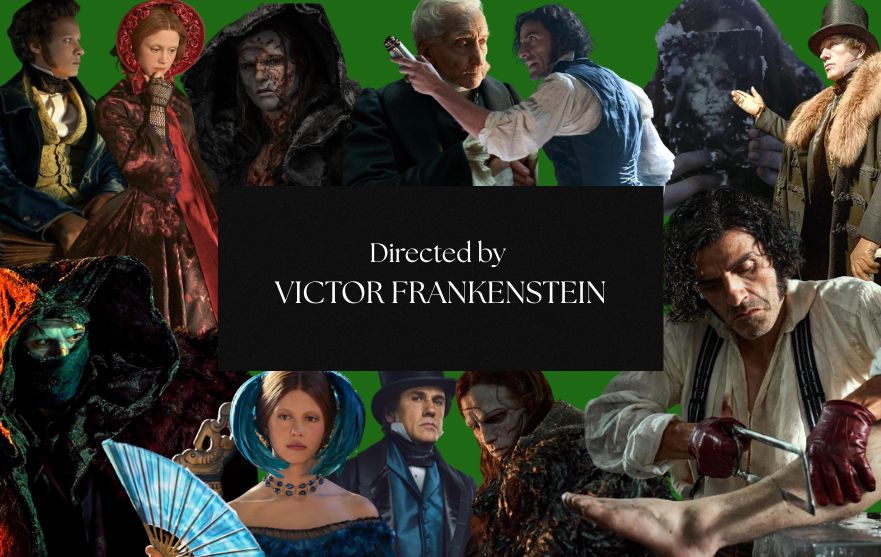
It’s no secret that Mary Shelley’s “Frankenstein; or, The Modern Prometheus”–published on Jan. 1, 1818–is a staple of Gothic literature. This story questions nature versus nurture, depicts the cost of human ambition, and speculates on how science and humanity intermingle. These are all themes Shelley focused on in her novel and they are still captivating audiences to this very day. Guillermo del Toro’s latest film, “Frankenstein” is proof of this.
“Frankenstein” was released on Nov. 7, 2025, to mixed reviews. Most audience members appreciated del Toro’s attention to detail in terms of aesthetics and no one could deny that the movie was interesting to watch. However, the story was significantly altered in the adaptation, so the film failed to accurately depict the tragedy of Victor Frankenstein and The Creature.
Zaid Maher, a Language Arts teacher at Huntington Beach High School (HBHS), spoke on the key differences between the book and movie. “The novel is very much more a feminine characterization of Victor. The film is much more of a masculine characterization,” he said.
Although it’s a seemingly small difference in characterization, this aspect changed the entire story. The thing is: the novel depicted motherhood. Victor Frankenstein brought The Creature to life–in a way, he birthed his creation. Cadaver by cadaver, Victor Frankenstein carefully chose each and every bit of human that he wanted to mold into the perfect man. Once he finally saw what he created, Victor was described as feeling utter dread in a way similar to a mother looking upon her deceased infant. Similarly, Shelley experienced losing young children of her own, so why does del Toro feel the need to change this main component of her work?
This question doesn’t really get an answer, because even the use of fatherhood did not help add any originality to the story. Victor Frankenstein’s past is switched from being one of an idyllic nature with a loving mother and distant–but kind–father, to one of a scared mother at the mercy of his abusive and neglectful father.
Great, another story about breaking the cycle of abuse. Haven’t heard that one before.
Of course, this storyline could be interesting if executed in a new or unique way. But guess what? Del Toro doesn’t do that. Victor Frankenstein was raised by a terrible father, and so that’s what he becomes once The Creature comes to life. Then, he does nothing to apologize for these actions, yet somehow is forgiven by The Creature in the end. Roll the credits!
This story has been told hundreds of times and del Toro managed to add nothing new, interesting or thoughtful.
What else has been done hundreds of times? Overly introspective Gothic women who pretend to be more than just the love interest they were written as. That’s right, Mia Goth gets to play two women in this movie, and somehow remains as a tool to move a man’s story along.
The Mischaracterization of Elizabeth Lavenza
Interestingly enough, del Toro chose to change Elizabeth Lavenza’s relationship with Victor Frankenstein in a very strange way. Originally, Lavenza is Victor Frankenstein’s adoptive sister who eventually becomes his wife. Instead of this, del Toro decided to introduce Lavenza as the fiancée of Victor Frankenstein’s younger brother, William Frankenstein (who is aged up in the movie), and the niece of Heinrich Harlander (a character that is original to the movie), the man who is funding Victor Frankenstein’s scientific experiments.
In the novel, Lavenza does not speak. It’s not that she is mute in any way, she simply isn’t written to have any dialogue. Del Toro goes out of his way to change this by deciding to give more power and intelligence to Lavenza, which is wonderful–in theory.
Unfortunately, this decision that originally seemed like a way to modernize an over 200-year-old story resulted in a cliché, overdone trope of an emotionally intelligent woman in a Gothic film spewing bland monologues about morality and ethics. It’s not that del Toro’s Lavenza is necessarily an awful character, she’s just boring. After centuries of filmmaking, how are directors still struggling with depicting interesting women in film, and why would del Toro adapt a story written by a woman if he cannot properly create a unique woman?
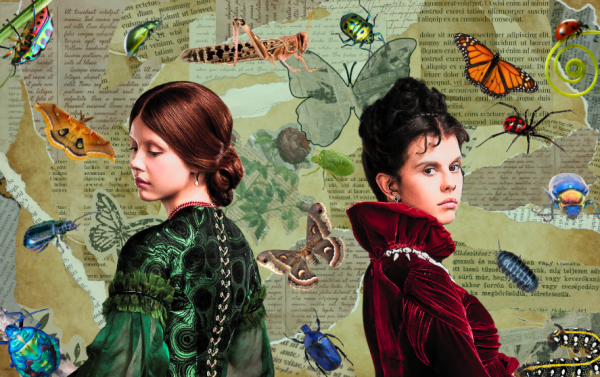
Well, he has another chance to prove himself, which is with Victor Frankenstein’s mother, Claire Frankenstein–who is also played by Goth. Oh dear.
Yes, that’s right: del Toro decided the best course of action for this adaptation was to sprinkle in an Oedipus complex for Victor Frankenstein. How fun.
Claire Frankenstein was only shown in the beginning of the movie, where she acted as a light amidst Victor Frankenstein’s difficult relationship with his father (Leopold Frankenstein), who is a cruel and egotistical doctor.
In the film, Claire Frankenstein died during childbirth. It was heavily implied that Leopold Frankenstein, as the doctor delivering the baby, allowed her death to happen. Once Victor Frankenstein saw how doctors were able to decide who lived and who died, his obsession with creating life out of death set in.
This change in the adaptation was quite interesting. It presents the audience with a new motive for Victor Frankenstein–a motive that was not apparent in Shelley’s work. The issue with this change was the casting of Claire Frankenstein. Why is the woman who is playing Victor Frankenstein’s mother also playing his love interest?
More to this point–why is the woman playing the love interest to Victor Frankenstein also playing the love interest to every other main male character in the film? By the way, the one man who she is not the love interest of is her uncle. There were two woman in this story and they were both only as important as the men they had relationships with.
Funnily enough, Goth’s relationship with Victor Frankenstein – as Lavenza – was not the most important romantic connection she had in del Toro’s story. No, that’s her romantic interest in The Creature. Well, to be more specific, The Creature had a romantic interest in her, she was more maternal towards him.
Anika Longheyer, a sophomore at HBHS, said, “I think they added the subtle romance to add to the tragedy and possibly emphasize the loneliness of the monster and his desire for connection.”
This perfectly explained why del Toro made the choice to include more romantic elements in his film than there were in the novel (Shelley never implied a romantic relationship between Lavenza and The Creature). To be fair to del Toro, it was incredibly in-character for the Lavenza he wrote to fall in love with The Creature. Yet, this is exactly why it was an issue: no one was surprised. This idea of a woman falling in love with the so-called monster of the movie has been portrayed countless times in cinema. Why can’t audiences see anything new? How many more times are they going to sit through the same old story of a gorgeous woman falling in love with a freak of nature just to act like it’s a new idea?
De-freakifying Victor Frankenstein
The next major alteration of the original story takes shape with the characterization of Victor Frankenstein. In the most basic terms possible, del Toro de-freakified his main character.
Beth Lammers, an English teacher at HBHS, said, “He’s changing the character because he wants you to like him like he likes him. But that also implies that Guillermo del Toro has some narcissistic, hubristic belief systems about himself – which I think he probably does.”
Del Toro is enamored with Shelley’s work, that much is clear. He obviously appreciated “Frankenstein” for the unconventional nature of the characters, however he didn’t trust his audience to do the same. His way of fixing this? By filtering the original characters to make them more palatable.
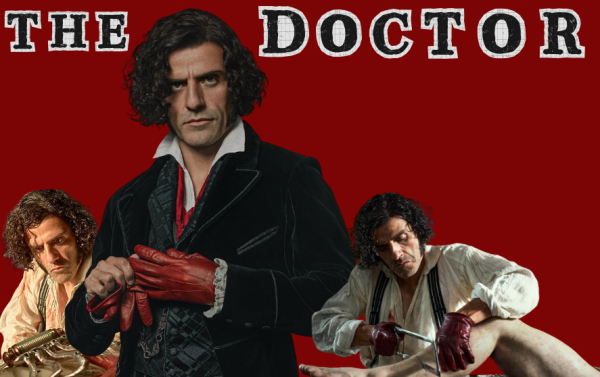
Victor Frankenstein is a little brat who grew up in a wealthy, loving family. He spent his college years grave robbing and (secretly) building his ideal man, just to run away like a coward once he finally brought his creation to life. He and The Creature never got a happy ending due to his own selfishness.
Thanks to del Toro’s intervention, the new Victor Frankenstein grew up in a wealthy, but abusive family. He spent his adult years trying to prove to people how he could create life all by himself, but no one believed in him. No one, except for Harlander, who stepped in as his sponsor and funded his entire mission to building a person. He attempted to be a good father to The Creature when he first came to life, but quickly derailed into an abusive parent, just like his own. He is hunted by his own creation, (that can’t be killed of course), until he died holding The Creature’s hand, finally at peace with himself and his creation.
Sure, one could argue that the movie version of Victor Frankenstein was just as unlikable as the book version. Some could even claim he was worse. But, if Victor really was a horrendous human being, why did he receive forgiveness? On top of that, why was he so accepted by the characters around him? In the novel, he kept his scientific explorations to himself, and for good reason. In a way, he was playing God. This complex of his was apparent throughout the story – Victor Frankenstein believes he had the right to create his perfect human, but he feared what others might say. With del Toro making him so open about presenting The Creature to other people, he is actively destroying this sense of shame that lingered within Victor Frankenstein.
Victor Frankenstein doesn’t deserve any explanation for who he became, so why give him one? People can be horrible without reason – many are. What made him so interesting was that he had no excuse for his narcissism, but del Toro ignored this fact, creating a much less exciting take on Victor Frankenstein.
The Quote
The last component of this movie that alters the original message of Shelley’s story was not a change, per say. It was an inclusion of a quote at the very end of the film, right before the credits. Whose quote was this? Was it from Shelley, the creator of this story? Was it Mary Wollstonecraft, Shelley’s mother, well-known philosopher and advocate for women’s rights? Was it literally any one of the early female writers who were often underrated and not even allowed to publish their books with their names on it?
Nope! It was a bland quote from Lord Byron, a well-known English poet. Great.
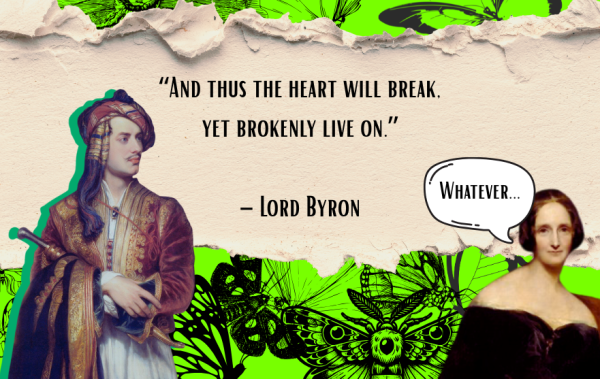
Of course, there was some reason for this choice. Lord Byron was the one who encouraged Shelley to write “Frankenstein.” They did have some kind of relationship with each other – it’s not as though del Toro just picked a random person’s quote. In a way, he was actively honoring the origins of “Frankenstein.”
Claire Main, an English teacher at HBHS, said, “We have to look at the movie like a love letter to Shelley and The Creature; not so much a true adaptation.”
But here’s the real question: why on Earth would del Toro pick a man to be the last voice in a story that was criticized for its femininity? Why wouldn’t he just include a quote from Shelley? There were so many valuable quotes from her that were more appropriate to the story. Want to know why? She wrote the story!
As the movie went on, it seemed more and more like del Toro read “Frankenstein” and thought, “Hm, I wonder what this story would be like if a man wrote it.” Unfortunately, this is the thought that ruins the film–not because men are uninteresting, but because it seems as though every Gothic film about men is written by men. There is nothing new about looking at masculinity through the lens of the masculine. Shelley’s choices on how her male characters behaved was what made “Frankenstein” such a fascinating book.
All in all, this movie was, quite frankly, disappointing. It was almost as unoriginal and cringy as that pun.