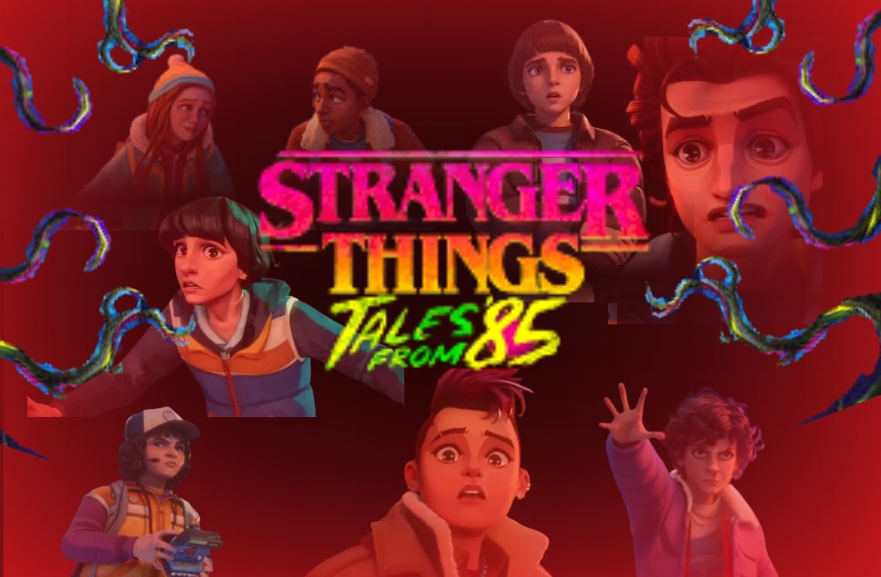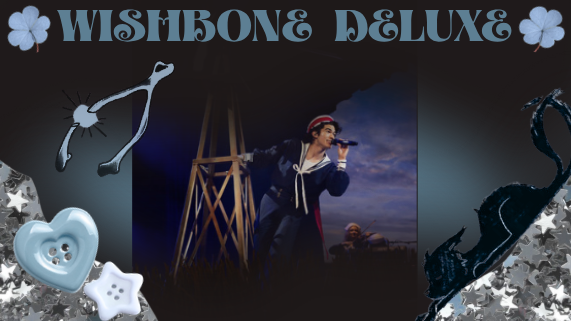
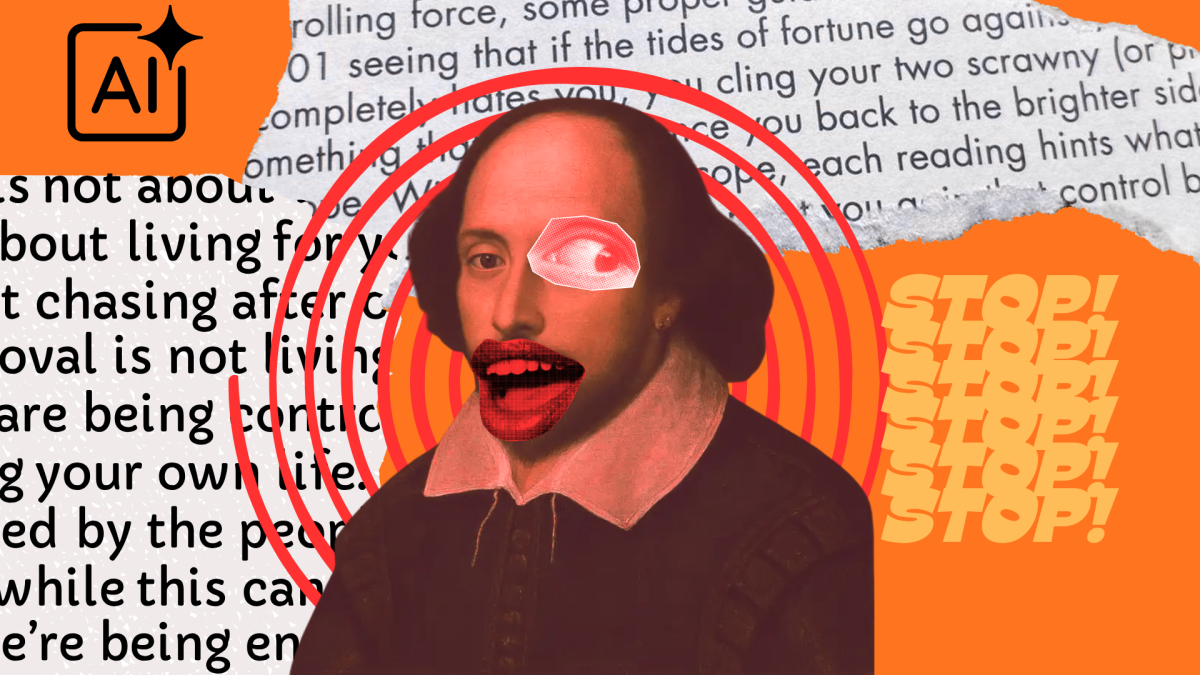
It’s almost certain that everybody who goes to Huntington Beach High School (HBHS) knows about the Academy of Performing Arts (APA). Its large productions include Musical Theater and Acting, pop-rock concerts with the Music, Media and Entertainment Technology department (MMET) and showcases from the Dance department. However, some people may not know that APA uses AI to generate the art used for many of their promotional flyers.
Many students believe that promotional materials for APA should be student created.
“I’m staunchly against it in commercial usage. I’m okay with AI being used to produce ideas, but I think it should be used very sparingly in today’s art world,” Sean Stills, a junior in the Dramatic Production department at APA, said. “Namely, ‘Romeo and Juliet’ had an AI poster. The others you can argue if they are or aren’t, but that one had an obvious AI poster.”
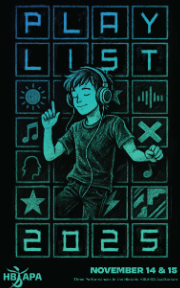
Some people may not see anything inherently wrong with using AI for flyers, but it goes much deeper than a quick and convenient art generator. AI search engines use water to cool down their systems after every prompt, using up to six times the amount of water a human drinks in a day. A prompt typed into ChatGPT uses 10 times the amount of electricity it takes to form a single Google search, said the International Energy Agency.
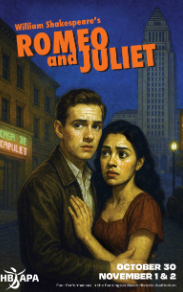
Along with the environmental damage AI causes, using generative AI, especially for something like a poster for a school play, takes away opportunities from artists. HBHS has an overwhelming amount of students who are more than willing to create a poster that is creative, effective and most importantly, better for the environment than using AI.
“I think it’s a great opportunity for artists to share their art on campus. You can argue if they should be commissioned for it, but I would much rather see student-made work,” Stills continues.
The art department’s students have incredible talent that could be used to create original posters.
“By using AI, it’s taking away the creativity of the people who go to this school,” Parker Kenyen, a junior in the MMET department, said. “We have a lot of creative students here, and they’re not utilizing their creativity. I just feel like the art isn’t appreciated enough. I think we should be able to use the students in the art department. It allows them to put what they think represents the shows.”
It isn’t just APA students who are complaining about this issue. At HBHS, many creative people choose to take art as an elective in order to expand their horizon and perfect their craft. It’s precisely why the art department was established: to give students the tools they need to create amazing things.
However, APA staff say that using AI-generated work is simply a way to draft what the finished product will look like. April Sharp, Public Relations and Audience Building director for APA said, “Like many creative teams, we sometimes use A.I. tools early in the process to explore visual ideas for inspiration or direction. Those images are simply starting points—not finished work. Everything that goes out publicly is shaped, edited, and finalized by our highly skilled designers to make sure it’s custom and on-brand.”
However, this creative process still disregards HBHS art students.
“If it’s so wrong for [us] to use Generative AI, then why are teachers [allowed]?” Sage Vega, a senior art student and former Musical Theatre major said. “Speak out! Ask artists for help on posters and respect your audience!”
It’s disheartening to see our school neglecting their large community of artists who work tirelessly to put on quality productions that can take months to fully complete. With all this energy put into each show, how is it fair to create posters using generative AI that spits out an image in less than ten seconds? However, there is hope that in the near future, APA will listen to the voices of the students and use art that the entire community can be proud of.