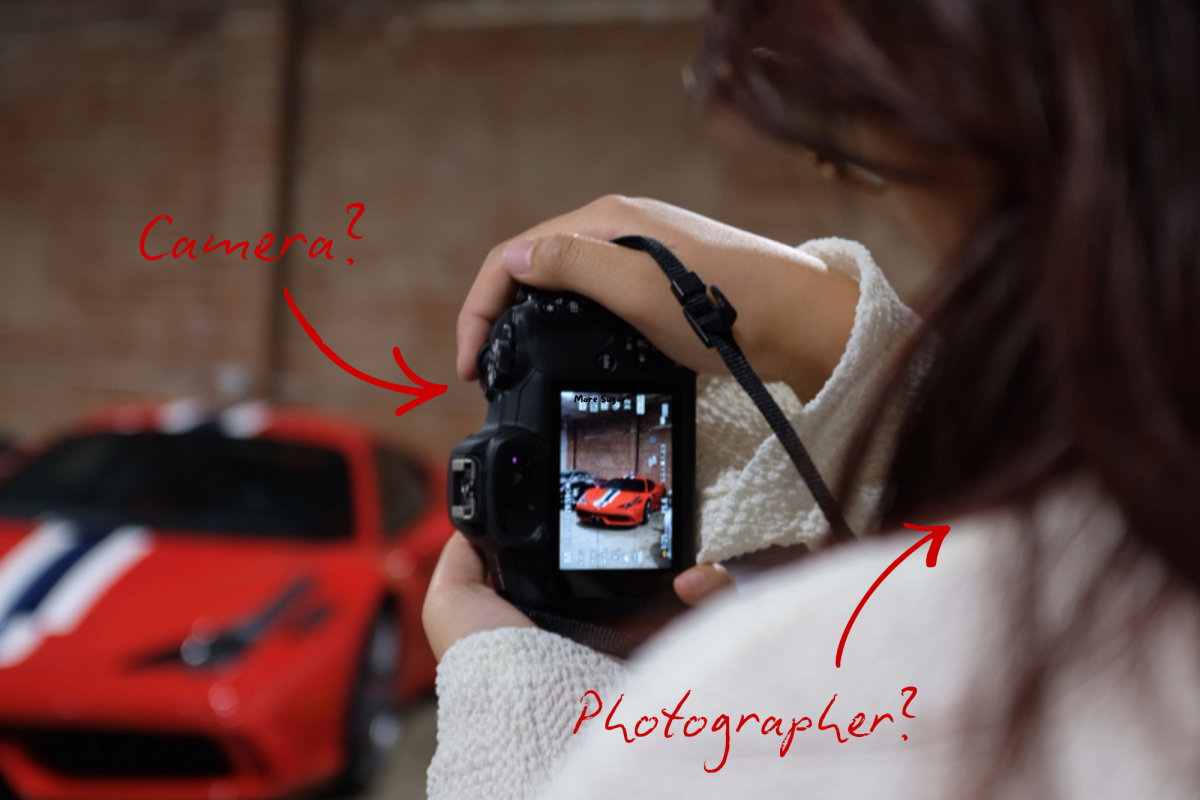
At least once during their career, a photographer ponders the age-old question: Is a good photo derived from the camera or the photographer behind it?
What makes a photo “good” is subjective since everyone has a different creative vision. One could argue that either the photographer or the equipment matters most, or that both of them matter equally.
To start, let’s discuss the camera:
There’s an innumerable amount of cameras and types of cameras circulating the photography world, and every photographer finds one that they love. Whether it’s a small, 30-year-old point-and-shoot or a brand new Nikon DSLR, everyone has their own preference.
Gavin Neal, a photography student at Orange Coast College (OCC), said, “High quality equipment isn’t necessary, but a better camera gives you more opportunities.”
Newer or more expensive cameras typically have functions that older cameras don’t. For example, newer cameras have noise reduction and stabilizing abilities, while older models tend to rely on the individual operating the camera to have a steady hand in order to achieve a clear image.
“When you have higher quality equipment, you can shoot in low light and still produce clear images. That’s everything to me, but [it’s] also super expensive,” said Donnae Menchaca, a professional photographer in Orange County known as “Naesfotos.”
Admittedly, yes, a higher quality camera creates a higher quality photo, but that doesn’t necessarily mean that it’s a “good photo.”

A great photo could be one of haziness or low quality, which creates a comforting and warm mood. Or a great photo could be one of sharpness and high quality, which portrays a powerful and direct image. Both options truly depend on the photographer.
“The decision to use the right tool for the job is itself an act of craft and intention,” said Will Hare, a photography professor at OCC.
The photographer is the one who holds and manipulates a camera to their liking. A photographer relies on a camera to capture the moment or image that they see.
Photographers use their creativity to find subjects to shoot and discover their personal style and technique. Some photographers use multiple cameras to obtain a different style or mood in just one photo session. Some could choose to use an older camera for a vintage feeling or a newer one for a clean image.
It’s the photographer’s vision that decides the composition, the direction of light and low or high angles. It’s simply the camera’s job to brings the photographer’s vision to life.
In his personal blog, Virginia-based professional photographer, Robert Hamm, said, “The equipment is only a tool. That being said, as a photographer develops their technique and style, they will likely seek out lenses and cameras which will help them be more creative.”

Hamm also mentions Gear Acquisition Syndrome (GAS), which is the irrational desire to buy new and more cameras, lenses and accessories, believing that they will instantly improve skills. Many photographers, especially those with less experience, find comfort in buying new equipment because they hope that it will improve their photography. Although newer equipment can create more learning opportunities, equipment is not directly correlated with a photographer’s skill.
“A master photographer can easily pick up any piece of photographic equipment and create art with it,” said Hamm.
A photographer cannot photograph without a camera, and a camera cannot take a photograph without a person behind it. Whether it’s a lower quality camera, or an inexperienced photographer, they both contribute to the artistic value of the final image.
All in all, a camera works as a photographer’s tool, and images could not be created without an operator. A good image cannot be credited to just the equipment used, as the photographer’s vision is what matters most.
As Hare said, “All the camera gear in the world, in the hands of someone without vision or intention, is a lost cause.”