
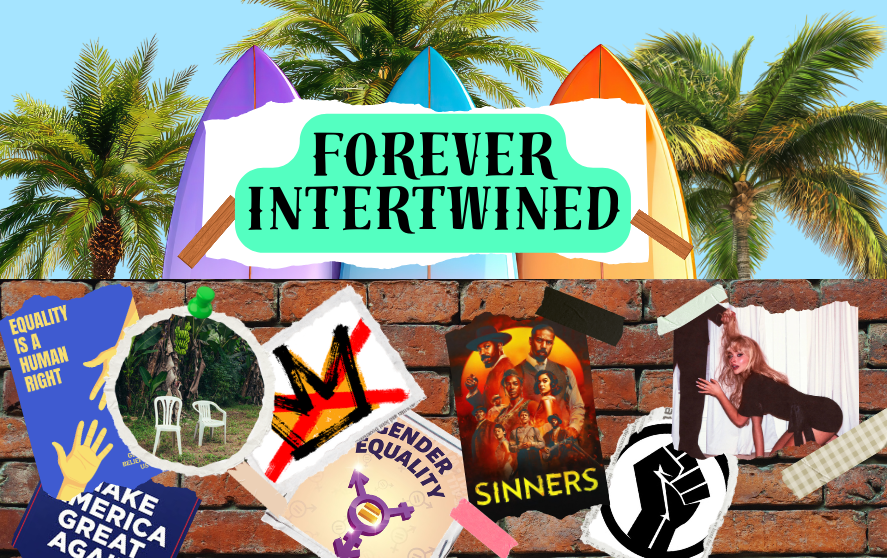
Whether it’s the Oscars, Grammys, Emmys, or MTV Music Video Awards, artists will always end up taking the stage, shouting out longtime supporters, speaking up about an impactful topic, and thanking their voters.
When an artist speaks out about anything that is important to them, politics are often the foundation of their statement. Maybe they’re bringing attention to ICE’s impact on the country, or they’re speaking up for LGBTQIA+ rights, or maybe they’re shedding light on the systemic racism millions of people experience every single day. While many applaud these artists for speaking up, others are less than pleased. The unhappy people seem to share the same opinion: “Art isn’t political! Celebrities need to stay out of politics.”
Art is—as most things are—inherently political because of how society is built. Not every piece of media is based upon a strong political opinion, but because society itself is shaped by the ways politics affect the world, art will forever be politicized.
Cameron Mullin, a senior at Huntington Beach High School (HBHS) and the Academy for the Performing Arts (APA), said, “I think that art doesn’t have to be political, but I think it’s because of how people are and how people have their own values, their own thoughts, their own dreams, a lot of art can become political and have political themes—even if it’s unintentional.”
This is a perfect description of one of the two main ways politics are shown through art: The Reaction and The Statement.
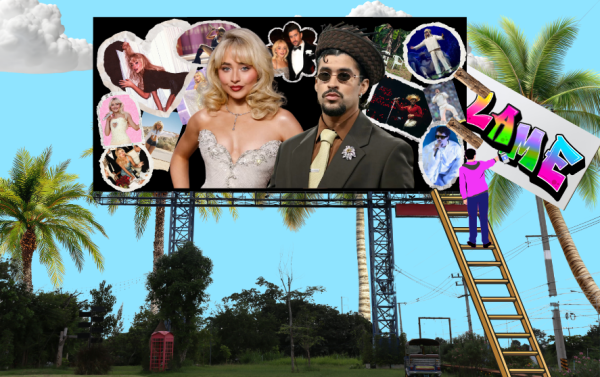
The Reaction
The Reaction is basically the name for when the public’s opinion on a work of art is more politically charged than the art itself.
Think of Sabrina Carpenter. She’s a fun, flirty pop singer who writes (mostly) unserious songs about dating men in the 21st century. Her music does not necessarily contain big political statements, but the way people react to Carpenter’s work reveals the views and opinions they have about women and a woman’s freedom to self-express.
When Carpenter released the cover image for her latest album, “Man’s Best Friend,” the public reaction was quite extreme. There were claims that Carpenter had “set feminism back several decades,” that she was overly male-centered and that she was, overall, giving women a bad rap.
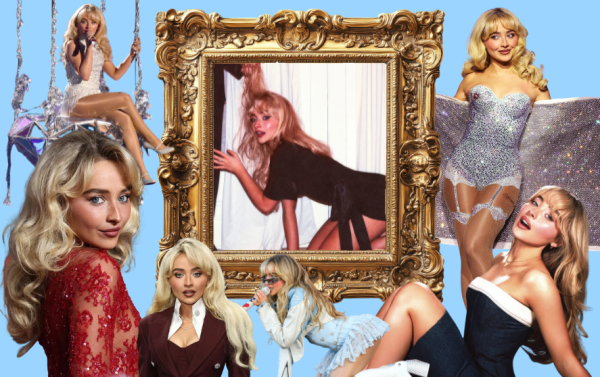
First off, the notion of one individual being capable of setting back a historic movement about equality is not only an insult to Carpenter herself, but also to feminism in general. Carpenter doesn’t represent every single woman, she’s simply one of many. This is where the main issue lies in the arguments against Carpenter’s self-expression. The people who are critiquing Carpenter’s personal identity are not attempting to fight for feminism—they are fighting for control.
Chloe Dean, a sophomore at HBHS, said, “There’s a difference in policing how women express themselves and trying to understand why they express themselves in a certain way.”
The majority of Carpenter’s critics were not genuinely making an attempt to understand why the singer was posing as a dog getting dragged by her hair, they just didn’t like how she was expressing herself.
While Carpenter doesn’t sing about women’s rights or the double standards female performers face when choosing how to appear to the public, these topics were brought up in every conversation about her and her album cover. This is because, still, in the year of 2026, women controlling how they want to be viewed by society—whether that be appearing overly innocent, provocative, comical or intelligent—is something that makes people uncomfortable. Carpenter doesn’t write political music, but the public’s seemingly shared interpretation of her work was clearly rooted in politics—specifically, women’s freedom of self-expression.
Now, The Reaction is only the first way art and politics can become intertwined. The second way (and rather obvious way) politics appear in art is through The Statement.
The Statement
The Statement is exactly what it sounds like: it’s a piece of art that is wrapped around a political statement. While The Reaction is all about how the audience interacts with art, The Statement is about the art itself. The artist wants the audience to read between the lines or, in many cases, just read the actual lines, as they are obviously political.
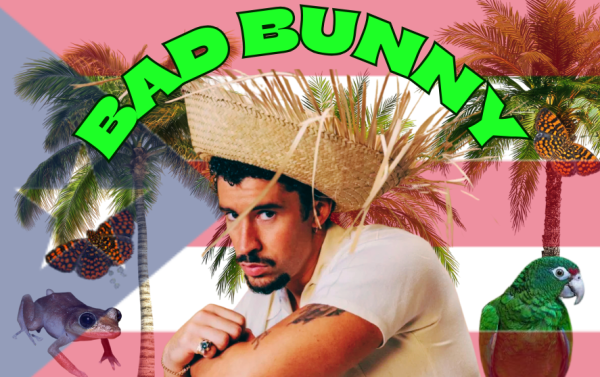
A piece of media that exemplifies both The Reaction and The Statement in its work is Bad Bunny’s album, “DeBÍ TiRAR MáS FOToS.” This album manages to be about partying, dancing and hooking up, as well as celebrating the rich culture of Puerto Rico and calling out how colonialism has negatively impacted it.
On The Statement side of things, Bad Bunny includes very obviously political songs and lyrics, such as “TURiSTA,” a piece that tragically depicts the relationship between Puerto Rico and tourists. Bad Bunny references how tourists go to enjoy themselves in Puerto Rico but they ignore the plights of locals, like hurricanes or the common power outages. He also brings up the gentrification and displacement of Puerto Ricans in several songs, most prominently in “LO QUE LE PASÓ A HAWAii.”
With The Reaction, Bad Bunny’s celebration of Puerto Rican culture is enough to create a slight division among the public.
“I think most art can be considered inherently political because it’s oftentimes a reflection of the time period. So, for example, Bad Bunny’s album. It emphasizes his Puerto Rican heritage in a time period where there is a more abrasive reaction to Latin culture,” said Trinity Orman, an art history teacher at HBHS.
Songs like “EoO” are not overtly political but cultural celebrations. However, in modern-day America, diverse cultures do not go unnoticed. If Bad Bunny had released this album at a different time, it very well could have been a mostly nonpolitical album, and perhaps there wouldn’t have been a huge flood of hate against Bad Bunny and his music. Most likely, there would not have been as loud an uproar against him performing at the Super Bowl.
Another piece of media that falls in line with The Statement more so than The Reaction is Ryan Coogler’s “Sinners,” released on April 18, 2025.
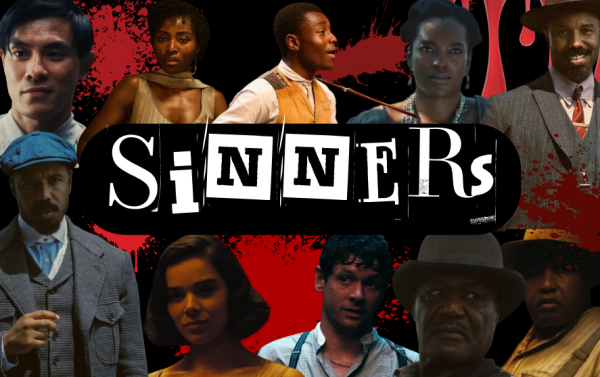
“Sinners” is a movie about many things: the power of music, the legend of Robert Johnson at the Crossroads, systemic racism and the desire to belong. The audience is able to witness each of these topics being thoroughly depicted. They get to see the progression of music, specifically in relation to how Black musicians have always been at the forefront of it. They see a version of Robert Johnson, an unforgettable blues singer and guitarist, and his story, but they’re also introduced to an allegory for systemic racism through vampires.
In the film, the main focus is on the opening night of a juke joint set up by Smoke and Stack (played by Michael B. Jordan), the twin cousins of Sammie Moore (played by Miles Caton), a preacher’s son who just wants to sing the blues. It’s 1932 in Mississippi, so the need for a safe space for Black people was necessary—thus, the juke joint. The evening turns on its head when three white vampires attempt to join the party. “Sinners” uses vampires not only as away to make the draining experience of racism more literal, but it also uses the creatures to expose the monstrous behaviors that people really did exhibit in the 1930s.
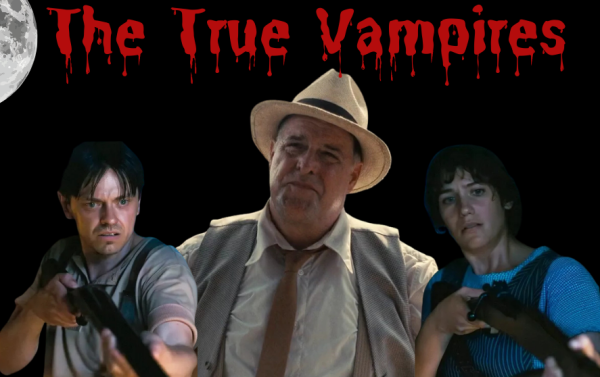
The thing is, the juke joint was never going to work out. Yes, the vampires killed and demonized most of the inhabitants of the joint on opening night, but if the vampires never came, it wouldn’t matter, as the white landowner, named Hogwood, who sold the building to Smoke and Stack was a part of the Ku Klux Klan (KKK) and was planning on doing something much more sinister.
The vampires and the white supremacists were equally inhumane and the only difference between the two is that the white supremacists actually existed (and still do).
Coogler’s movie depicts the inability of oppressed people to win when everything seems to have been set up for them to fail. The fact that this film was Oscar-nominated a record-breaking 16 times is proof that openly political work can be successful in the industry.
So, when the next award show occurs and people inevitably make their acceptance speeches, remember that, while they are celebrities, they are also artists. Artists who, in one way or another, manage to always find their way back to politics.